Ducal Palace of Petacciato: medieval history and noble charm
The Ducal Palace Battiloro of Petacciato, commonly referred to as the “Castle,” is a captivating historic building located in the oldest part of the town, just a few steps from the picturesque Church of Santa Maria. Originally built as a defensive fortress, the structure has evolved over the centuries—from military stronghold to noble residence—while maintaining a timeless charm that continues to attract visitors. Its privileged position offers a unique view of the Adriatic Sea and the Tremiti Islands, adding a spectacular natural backdrop to its architectural appeal.
The History of the Ducal Palace and the Battiloro Family
The palace has medieval roots, with its construction dating back to the Norman period—evident in the thickness of the walls and remaining defensive features like machicolations and the ruins of a drawbridge once used to repel invaders. When the Battiloro family took possession, the fortress underwent a major transformation into an elegant noble residence. In 1463, the palace and the surrounding village suffered severe damage during a military attack led by Antonio Caldora, which left both in ruins.
In the second half of the 19th century, Countess Ortensia d’Avalos initiated a revival of the palace. A new upper floor and the still-visible battlements were added, using stone from local Petacciato quarries to honor its new residential purpose.
Architecture and Interior Details
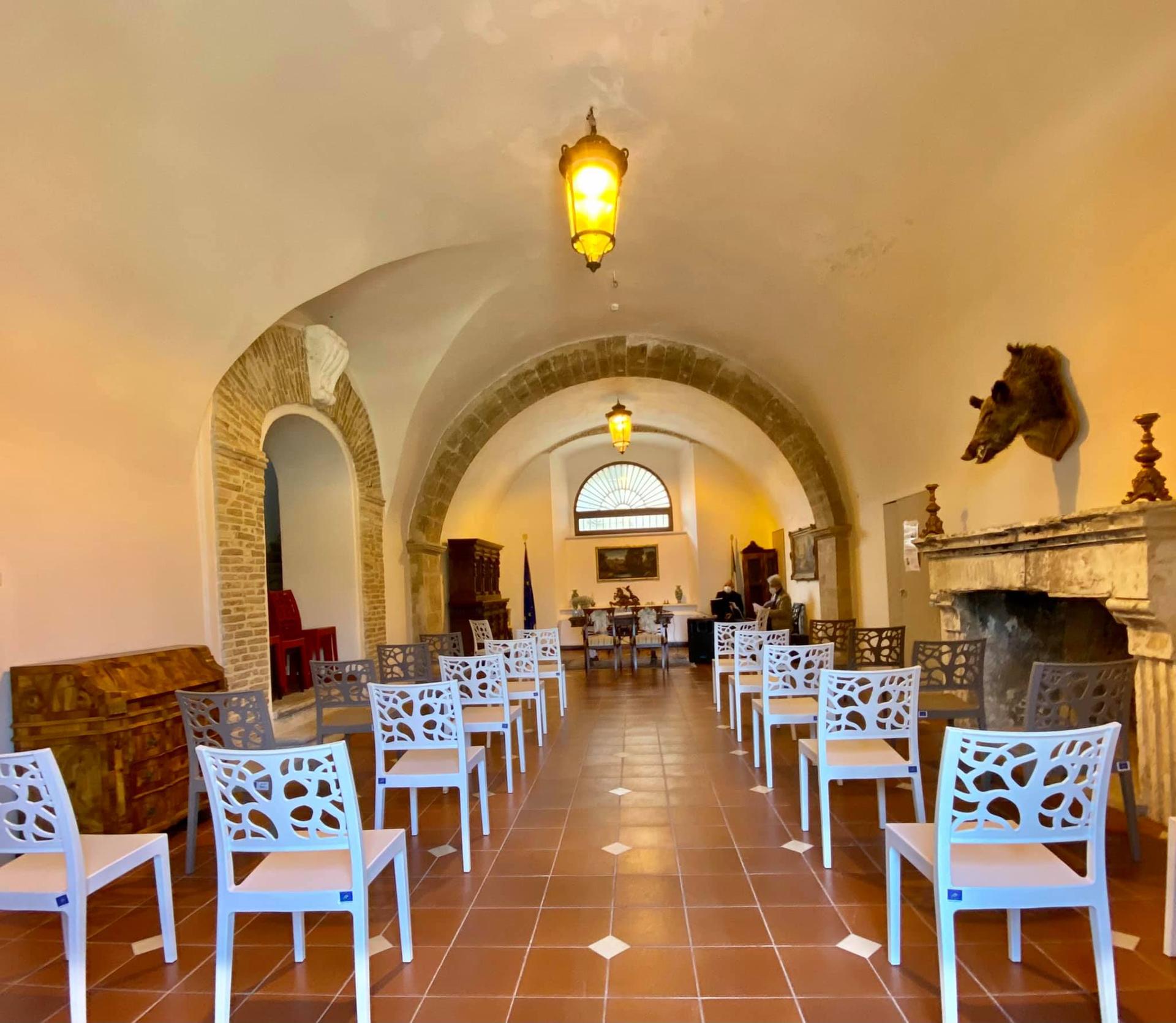
The palace today features a quadrangular layout and a simple yet imposing stone structure, built with rough stone and pebbles. It retains architectural elements from different periods, such as brick vaulted ceilings and wooden beams, giving a glimpse into its original form. The 19th-century additions include decorative battlements and stone-framed windows, reflecting the noble style of the era.
Inside, the ground floor houses a large hall, once used for receptions and celebrations, adorned with fine decorations. The rooms were enriched with statues, bronze artworks, collections of antique weapons and coins. Bedrooms were furnished with valuable antiques and featured an extensive collection of local wildlife hunted and preserved by the duke.
A Renewed Attraction for Visitors
In 2016, after years of closure, restoration work began to restore part of the palace’s former glory. These efforts aim to enhance the site as a cultural center for exhibitions and events, and as the home of the municipal multimedia library. Visitors can now explore the outdoor garden, the main hall, and restored rooms by booking a guided tour to uncover the palace’s history and the stories of the families who lived there. The Ducal Palace stands as a living testimony of Petacciato’s history, blending landscape beauty, heritage, and tradition.
Tips for Visiting the Ducal Palace of Petacciato
It’s recommended to book your visit in advance. During the guided tour, guests will be immersed in local history and, on special occasions, can taste regional products, offering a warm welcome into the heart of Petacciato’s culture.
Contact Information
- Address: Piazza Belgioioso, 19, 86038 Petacciato CB, Italy
- Opening Hours: Sundays from 4:30 PM to 7:30 PM, by reservation only
- Phone: +39 0875 703913 / +39 346 1317735
- Email: aast.europe@gmail.com
Ducal Palace Petacciato - FAQ
Is it possible to visit the interior of the Ducal Palace of Petacciato?
Yes, the Ducal Palace can be visited by reservation. Guests can access the main hall, some restored rooms, and the outdoor garden. During the guided tour, you can learn about the palace’s history and the noble families who once lived there.
What is the history of the Ducal Palace and who lived there?
The palace has medieval origins and was originally built as a defensive fortress. It was later transformed into a noble residence by the Battiloro family. Over time, it underwent several renovations, including a major restoration in the 19th century led by Countess Ortensia d’Avalos.
When is the Palace open and how can I book a visit?
The Palace is open on Sundays from 4:30 PM to 7:30 PM, by reservation only.
To book a visit, you can call +39 0875 703913 or +39 346 1317735, or send an email to aast.europe@gmail.com.