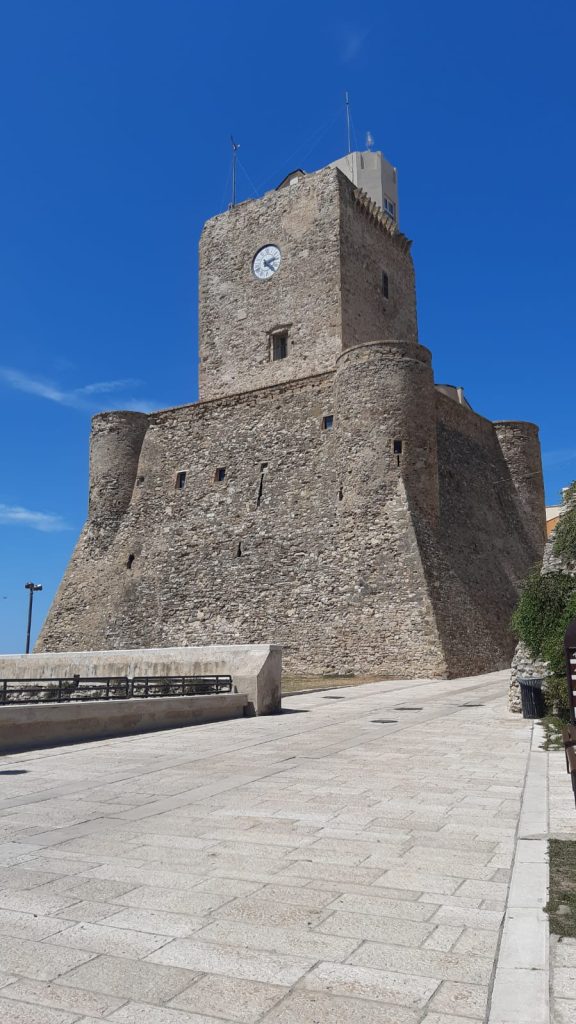
Unmistakable, elegant, and quietly majestic, the Swabian Castle of Termoli is the most iconic monument of the city. It's a true symbol of identity for locals, who have watched it rise from the promontory overlooking the Adriatic Sea for centuries. Its squared and austere silhouette can be spotted from afar along the coast, dominating the urban landscape and marking the entrance to the historic town center.
Built in the 13th century from limestone and sandstone, the Swabian Castle of Termoli was designed to defend the city from both sea and land attacks. Surrounded by solid walls with cylindrical towers, it still preserves the original entrance to the Old Town.
Originally a Lombard fortress, the castle was reinforced and expanded in 1240 under Frederick II of Swabia, who wanted it to serve as a defensive bastion against sea invasions. It is to this great emperor that the castle owes its current name, though the keep’s foundation and certain masonry techniques clearly reveal Norman origins.
Damaged by the 1456 earthquake, it was rebuilt at the request of Ferdinand I of Aragon, maintaining its role as both a defensive structure and a historical emblem of the city.
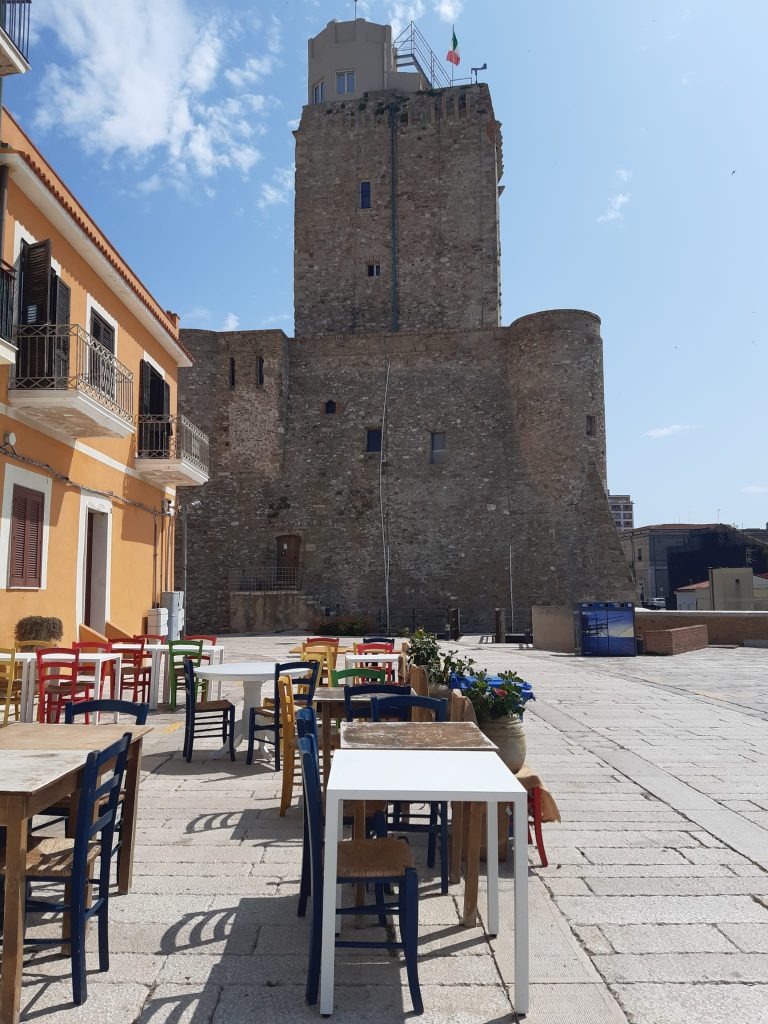
The Swabian Castle stands within the walls of Termoli’s Old Town, serving as its symbolic and physical gateway. The entrance is located on the side facing the historical center, on Via Federico II di Svevia, just a few meters before the archway that leads into the village. Its location is extraordinary: on one side, it offers a breathtaking view of the sea, while directly in front lies the Photographers' Overlook. It's a panoramic lawn looking out over Lungomare Cristoforo Colombo and the long Sant’Antonio beach.
Inside, the castle retains its original square layout, featuring a central tower and side rooms once used for military purposes. Over the centuries, it has served as a prison, temporary residence, watchtower, weather station, and now a cultural venue. It hosts temporary exhibitions of painting and photography and is often included in guided city tours.
Part of the castle is still used by the Italian Air Force, but the accessible areas allow visitors to experience layers of history through thick walls, walkways, and windows overlooking the village and open sea.
Since 2024, the castle’s lower floor houses the MuMa – Sea Museum of Termoli, a small yet captivating multimedia space that tells the story of the city’s maritime culture.
This modern and immersive exhibit features audiovisual installations, traditional artifacts, and stories from local fishermen’s daily life—from boats and fishing techniques to religious rituals and marine legends. A whole section is dedicated to San Basso, Termoli’s patron saint, and the famous sea procession held annually on August 3 and 4.
The Swabian Castle is also the stage for popular local events, most notably the "Burning of the Castle", held every August 15. This dramatic pyrotechnic display “sets the fortress on fire” during the Feast of the Assumption, drawing crowds from across the region. It’s a magical moment of music, celebration, and community spirit.
To explore the Swabian Castle and the charms of the Old Town while enjoying peace and nature, the Molisole accommodations are the perfect choice. Located between Petacciato and Montenero di Bisaccia, they offer authentic hospitality and unspoiled surroundings—just minutes from Termoli but far from the noise. Ideal for travelers wanting to explore Molise at a slower pace, and return each evening to a quiet, comfortable, and genuine setting.
What is the history and origin of the Swabian Castle of Termoli?
The Swabian Castle was built in the 13th century, with a base reflecting Norman origins. It was reinforced in 1240 by Frederick II of Swabia, who gave it its current name. Originally a Lombard fortress, it served to defend the city from both sea and land threats. After being damaged by an earthquake in 1456, it was rebuilt by Ferdinand I of Aragon and has remained a symbolic and defensive structure ever since.
What can you visit inside the Swabian Castle?
The interior features the original square plan with a central tower and side rooms, once used for military purposes. It has served various roles through the centuries and today hosts art exhibitions, photography displays, and the MuMa – Sea Museum, opened in 2024, which offers a multimedia journey into Termoli’s maritime traditions.
Where is the Swabian Castle located, and what can you see nearby?
The castle is located at the entrance of Termoli’s Old Town, with the main entrance on Via Federico II di Svevia. Opposite the castle is the Photographers' Overlook, offering panoramic views of Lungomare Cristoforo Colombo and Sant’Antonio beach. In the summer, the castle becomes the backdrop for the beloved “Burning of the Castle” pyrotechnic show during the Feast of the Assumption.